Authentic vs. Generic Thank You Notes: What Your Wedding Guests Actually Feel
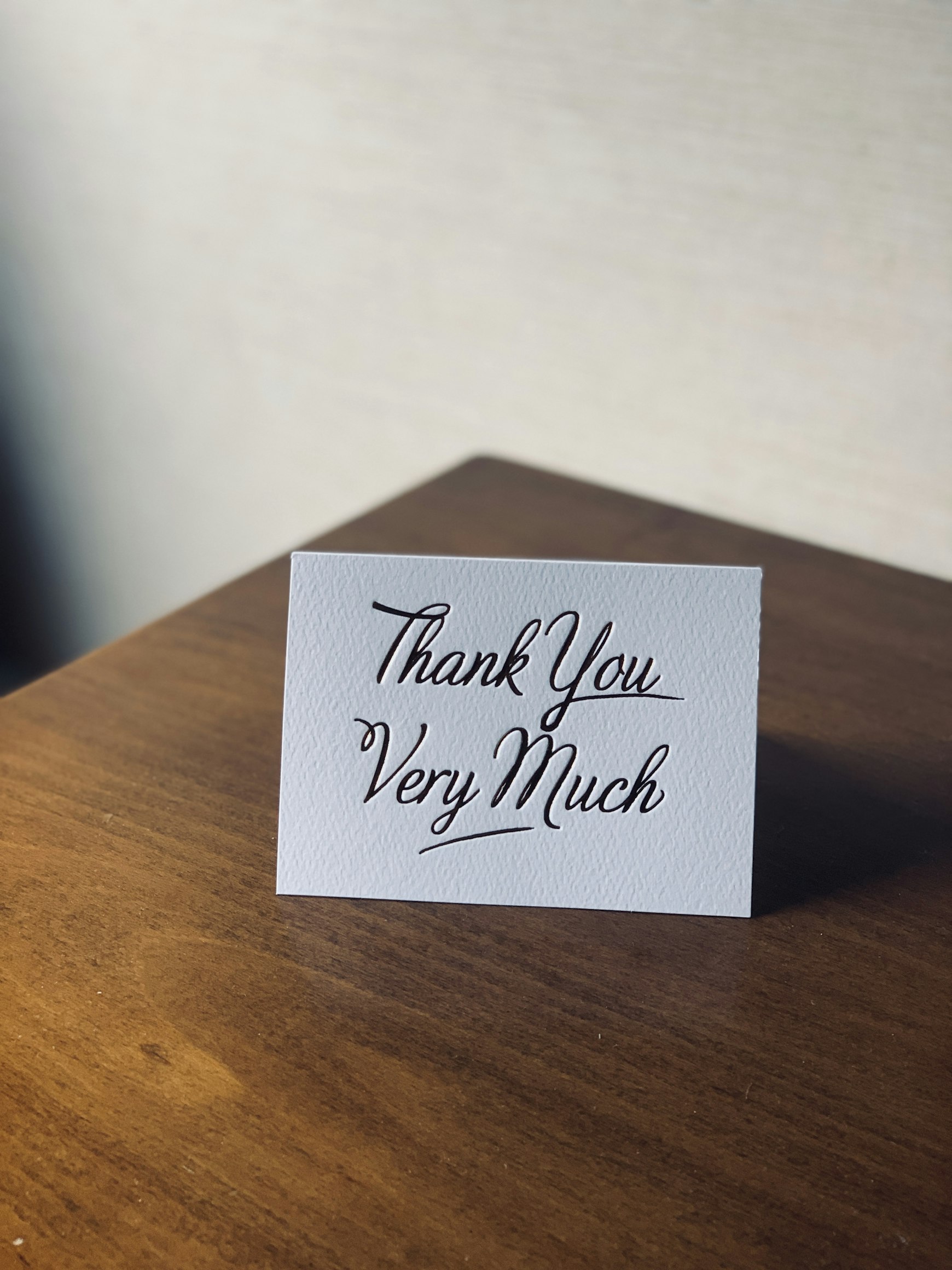
You probably remember the last thank-you note you received that actually made you feel something. Maybe it mentioned the exact gift you gave. Maybe it recalled a conversation from the wedding. Whatever it was, it felt real.
Now think about the last generic thank-you note you received. You probably don't remember it at all.
That gap between memorable and forgettable is the difference between authentic and generic, and it matters more than most couples realize when they sit down to write their wedding thank-you notes.
The Generic Note Problem
We've all seen them. Maybe we've even written them:
"Dear [Name], Thank you so much for the generous gift. We truly appreciate your thoughtfulness and for celebrating our special day with us. With love, [Couple]"
It checks every box. It's polite. It's appropriate. And it's completely forgettable.
The problem isn't that it's poorly written. The problem is that it could have been sent to literally anyone. There's nothing in it that tells Aunt Margaret you're talking to her and not the 99 other guests on your list.
When guests receive a note like this, the subconscious reaction is subtle but real: They didn't actually think about me when they wrote this.
What Makes a Note Feel "Real"
Authenticity in thank-you notes comes down to specificity. The more specific a note is to the recipient, the more genuine it feels. This breaks down into three elements:
1. Gift Acknowledgment
Mentioning the actual gift sounds obvious, but it's the most basic signal that you wrote this note for this person. "Thank you for the beautiful Le Creuset dutch oven" hits differently than "thank you for the generous gift."
2. Personal Connection
Referencing your relationship, a shared memory, or something specific about the guest transforms a thank-you note from a social obligation into a genuine expression of gratitude. "It meant so much to see you on the dance floor — you were the first one out there!" tells someone you noticed them, that they mattered.
3. Forward-Looking Detail
Connecting the gift to your future together shows you've actually thought about it. "We've already used the dutch oven twice this week — Jake's attempting his mom's pot roast recipe this Sunday" paints a picture. The guest can see their gift in your life.
When all three elements come together, you get a note that feels unmistakably personal:
"Dear Aunt Margaret, Thank you so much for the beautiful Le Creuset dutch oven — the color is perfect for our kitchen! It meant the world to have you at the wedding, especially after all those Sunday dinners growing up at your house. We've already used it twice this week, and Jake is attempting his mom's pot roast recipe this Sunday. We'll report back on how it compares to yours! All our love, Sarah & Jake"
That's a note someone keeps.
Why Generic Notes Happen (It's Not Laziness)
If personalized notes are so much better, why does anyone write generic ones? The answer isn't laziness — it's overwhelm.
The average wedding has 120-150 guests, many of whom give gifts. That's potentially 100+ individual thank-you notes. When you sit down to write them, the sheer volume creates a psychological barrier:
- Decision fatigue: What do I say to each person? How do I make each one different?
- Writer's block: The blank card feels impossible when you've already written 30 notes
- Time pressure: Etiquette says send them within 3 months, and the clock is ticking
- Perfectionism: Each note needs to be meaningful, which makes starting any single one harder
Faced with this wall, couples often default to a template. It's not that they don't care — it's that caring about 100+ individual notes simultaneously is genuinely difficult.
The Personalization Spectrum
The good news is that authenticity isn't binary. There's a spectrum between fully generic and deeply personal, and even small moves toward personalization make a meaningful difference.
Level 1 — Generic (forgettable):
"Thank you for the gift. We appreciate your generosity."
Level 2 — Gift-specific (better):
"Thank you for the beautiful serving platter."
Level 3 — Gift + personal (memorable):
"Thank you for the beautiful serving platter. It was so wonderful having you at the wedding!"
Level 4 — Fully personalized (keepsake):
"Thank you for the beautiful serving platter — the hand-painted design is stunning. Having you travel all the way from Portland meant the world to us. We're already planning our first dinner party and your platter will be the centerpiece!"
Most couples aim for Level 4 but end up at Level 1 or 2 because the effort of getting there for every single note is exhausting. The trick is finding a way to consistently hit Level 3 or 4 without burning out.
Where AI Fits Into Authentic Notes
Here's the counterintuitive truth: AI-assisted notes can actually be more personalized than handwritten ones. Not because AI is better at being personal, but because it solves the mechanical problem that makes personalization hard.
When you're on your 47th thank-you note, writer's block is real. Your brain is tired of finding new ways to say "thank you." AI can help by:
- Generating varied openings so every note starts differently
- Suggesting ways to reference specific gifts beyond "thank you for the [gift]"
- Offering phrasing options that match your tone and voice
- Helping you articulate feelings you're struggling to put into words
The key distinction: AI provides the structure and phrasing. You provide the personal details and feelings. The guest-specific memories, the relationship context, the genuine gratitude — that all comes from you.
A note drafted with AI assistance but filled with real, personal details will always feel more authentic than a handwritten note using the same template you've already written 50 times.
The Real Etiquette Question
Traditional etiquette says thank-you notes should be handwritten, personal, and timely. Notice that "handwritten" is about the final output, not the drafting process.
Nobody asks whether you brainstormed your notes on a computer before writing them on cards. Nobody asks whether you Googled "thank you note wording" for inspiration. The expectation is that the final product reflects genuine thought and gratitude.
Using AI to draft notes is no different from using a thesaurus, asking a friend for help, or looking up examples online. It's a tool in the drafting process. What matters is whether the final note, the one you handwrite and send, feels authentic and personal to the recipient.
Making Every Note Count
If you take away one thing from this, let it be this: your guests don't expect perfection. They don't need a literary masterpiece. They want to feel seen.
A note that mentions their gift, acknowledges their presence, and includes even one personal detail will stand out. It doesn't have to be long. It doesn't have to be eloquent. It just has to be theirs.
The couples who write the best thank-you notes aren't the best writers. They're the ones who found a system that makes personalization sustainable across every single card, whether that system involves AI drafting, batch writing, or something else entirely.
The goal isn't to impress your guests with your prose. It's to make each person feel like their gift and their presence at your wedding genuinely mattered to you.
Because it did. And they deserve to know it.
Related Reading
- The Case for Intentional AI: Why Technology Should Help You Write, Not Replace You - How to use AI thoughtfully in your thank-you note writing process.
- How to Make AI Thank You Notes Sound Heartfelt, Not Robotic - 5 practical techniques to inject your personality into AI-assisted drafts.
- 30 Personalized Wedding Thank You Note Phrases That Don't Sound Like AI - Ready-to-use phrases that feel genuine and personal.
Want to write thank-you notes your guests will actually remember? Try Heartfelt free and see how personalized AI drafts make every note feel real.
Frequently Asked Questions
Ready to start writing?
Heartfelt helps you organize gifts and draft personalized thank-you notes.
Try Heartfelt Free